

Connecticut Last Will and Testimony
Find out why last wills are essential in Connecticut, information regarding how probate court will influence your family, and more.
Developing a last will and testimony is essential in preparing the distribution of your estate (properties, including real and personal property) after your death. Connecticut wills offer the testator, the individual creating the will, the opportunity to make sure that a partner, children, various other loved ones, and even pets are cared for after his fatality. You might also choose to leave residential or commercial property or make various other gifts to philanthropic companies via your Connecticut will.
In comparison to a last will and testament, a living will certainly determines directions to be followed need to you end up being incapacitated and incapable of choosing regarding your health and healthcare. A living will certainly would work throughout a person’s life if essential, while a last will and testament does not take effect until after the testator’s death. Connecticut clearly enables living wills.
Do you require a last will and testament?
Although a last will and testament is not lawfully needed, without a will, state legislations (called laws of intestacy) will identify the distribution of the dead’s properties. The result may not coincide with the decedent’s (the person who died) wishes, however, which implies it is usually recommended to develop a last will and testament.follow the link More about idaho last will At our site
One of the best benefits of having a last will and testament is that it allows the testator to select the individual rep of the estate, the individual that will certainly be in charge of performing the wishes contained in the will; in the lack of a will, the courts would certainly decide for you.
A testator can make use of a will certainly for different purposes, however the most crucial is to express just how possessions such as realty, automobiles, company holdings, and family members heirlooms must be divided upon the testator’s death. A Connecticut last will and testimony can also enable you to name somebody as the legal guardian of your children.
Furthermore, in addition to testamentary depends on (counts on that provide an advantage for people), Connecticut regulation particularly allows for the creation of a count on for the care of pets to life during the settlor’s lifetime(“pet dog count on”-RRB-. Such a trust fund ends upon the death of the last making it through pet and should designate a “count on guard” to act upon part of the protected pets. A Connecticut will certainly gives you the option of caring for your animals after your death in this manner.
Before the regards to a will can be approved, the will certainly should be confirmed in court of probate. Probate is the court-supervised process of distributing the estate of a departed individual. Once the will is confirmed valid in probate court, the administrator can then settle any type of financial debts and tax obligations owed by the estate and afterwards distribute the testator’s property according to the will. The executor of a Connecticut estate have to get admission of a will to probate and can wage winding up the estate, consisting of repaying financial debts and taxes and dispersing property, afterwards.
Little estates in Connecticut, those with a worth of $40,000 or less, might be qualified to pass straight to heirs and bypass the probate process, yet they should fulfill the stringent requirements of Connecticut probate law.
Intestacy: Passing away without a will certainly
Someone that passes away without a will is called “intestate,” which conjures up the regulations of intestacy. In Connecticut, in the absence of a will, a making it through partner inherits whatever from an estate just if there are no youngsters or descendants of the decedent which spouse or the making it through parents. If there are such descendants, the spouse acquires the first $100,000 of the estate and 1/2 of the equilibrium, while the offspring inherit the remainder. If the decedent leaves behind both a spouse and parents but no youngsters, the spouse acquires the initial $100,000 and 3/4 of the balance while the moms and dads acquire the remainder.
If there is no surviving partner, youngsters, or moms and dads, Connecticut legislations of intestacy grant the dead’s estate to brother or sisters, after that grandparents, etc; the closer the family member, the greater the concern to acquire.
As you can see, if you would like to have control over the distribution of your properties and prevent the application of intestacy legislations, it is important that you have a legitimate Connecticut will.
Exceptions to the ability to distribute residential property
Not all residential property you have can be distributed with a Connecticut will. For example, residential or commercial property that is had in joint occupancy with the right of survivorship can not be developed by will. The recipient of a life insurance policy might likewise not be changed with a will.
Keep in mind that even if a partner is left out from a will in Connecticut, a making it through spouse is entitled to a 1/3 elective share of the decedent’s
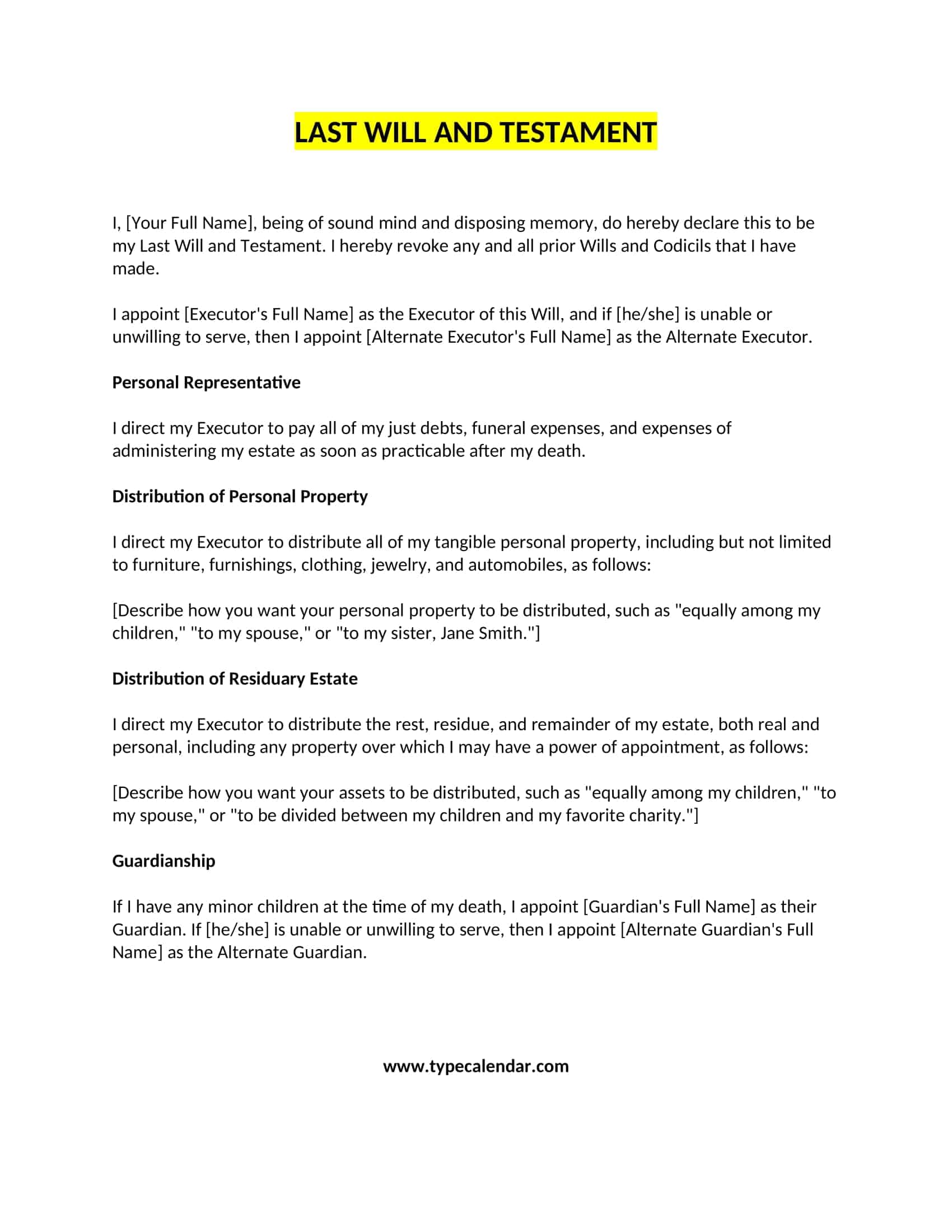
estate. Kind a last will in Connecticut
The basic requirements for a Connecticut last will and testament include the following:
- Age: The testator should go to the very least 18 years old.
- Capability: The testator needs to be of sound mind.
- Trademark: The will should be authorized by the testator.
- Witnesses: At the very least 2 witnesses should authorize a Connecticut last will and testament in the visibility of the testator in order for it to be valid. The witnesses have to sign after experiencing the testator authorize the will.
- Creating: A will certainly should be in writing to be valid.
- Beneficiaries: A Connecticut will may throw away residential or commercial property to any kind of beneficiary. If a beneficiary who is not also a successor to the testator has acted as a witness to the will, the bequest to that individual will certainly be void.
Other sorts of acknowledged wills
Connecticut does not acknowledge holographic (handwritten) or nuncupative (dental) wills produced within the state, however such wills developed in an additional state according to its regulations may be confessed to probate in Connecticut.
Changing a Connecticut last will and testament
A Connecticut last will and testimony might be altered any time before the testator’s death with a new will or a codicil, which is an addition or amendment that have to be implemented with the exact same rules as a will in order for it to be valid.
Withdrawing a Connecticut last will and testament
A Connecticut will certainly may be revoked at any time by the testator by a later will certainly or codicil or by “burning, cancelling, tearing or eliminating it by the testator or by somebody in the testator’s existence by thetestator”
direction.” Keep in mind that in Colorado, if a testator gets divorced after implementing a will, any stipulations for the ex-spouse are withdrawed by procedure of law.